From Designing Innovation to Co-Creating Caring Futures.
IDEAS 2026 08 - 11 NOVEMBER 2026, FLORIANÓPOLIS (SC), BRAZIL
Our Story
IDEAS is a conference bringing people together to imagine a fair and livable planet.
The Interdisciplinary Conference on Innovation, Design, Entrepreneurship, and Sustainable Systems brings together a diverse community of forward-thinking minds dedicated to shaping equitable societies.
Key Deadlines
Mark your calendar and get ready to join IDEAS 2026 with your work.
This is your opportunity to share innovative research, creative practices, and transformative experiences with an engaged community. IDEAS will bring together scholars, professionals, and change-makers to discuss new perspectives on design, innovation, sustainability, and social impact. The first step is to prepare your paper according to the submission guidelines and deadlines. Then you will have the opportunity to present your work and take part in inspiring conversations. Your contribution will help shape meaningful dialogues and collaborative connections. Prepare to connect, share ideas, and be part of a dynamic event that celebrates knowledge, creativity, and collective action.
Abstract Submission
Deadline: April 12, 2026
Abstract Decision Notification
Deadline: April 19, 2026
Full Paper Submission
Deadline: June 10, 2026
Full Paper Decision Notification
September 6, 2026
Copyright Form and Final Revised Paper Submission
September 30, 2026
Registration
10 August /10 September 2026 = Mandatory for at least one author per paper
IDEAS 2026 Starts
8–11 November 2026
Our Theme
Designing Under Polycrisis: Innovation for Planet, Peace, and Democracy.
In a world shaped by multiple, interconnected crises, innovation can help protect our planet and build pathways to peace, while design becomes a tool for care and change. Together, we can strengthen democracy and move toward a convivial society.
Our Topics
An invitation to imagine, act, and transform in response to planetary breakdown, social conflict, and democratic fragility.
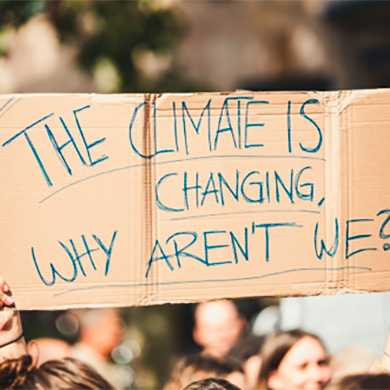
Planetary Boundaries, Biodiversity, and Regenerative Systems
This area focuses on ecological limits, biodiversity loss, and pathways for ecosystem restoration. It welcomes work on regenerative practices, nature-based solutions, indigenous ecological knowledge, and sustainable governance of natural resources.
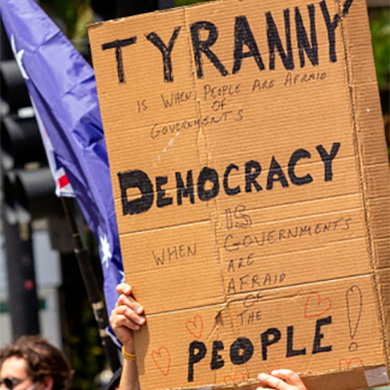
Democracy Under Pressure: Governance, Participation, and Trust
This area focuses on democratic backsliding, crisis governance, citizen participation, institutional accountability, and evidence-informed policymaking in polarized and unstable political environments.

Peacebuilding, Social Cohesion, and Community Resilience
Contributions explore how innovation, design, and policy can support social healing, coexistence, and community-based peacebuilding, particularly in contexts of displacement, trauma, and social fragmentation.

Design, Culture, and Political Imagination
Contributions explore design justice, art–science collaborations, cultural narratives, heritage and memory, speculative design, and creative practices as tools for social and political transformation.

Education, Knowledge, and Futures Literacy
Papers address transdisciplinary education, open science, futures studies, living labs, community-based learning, and education for democratic and ecological citizenship.

Innovation Beyond Economic Growth
This area welcomes work on ecological welfare state, ecological economics, degrowth, post-growth, frugal and social innovation, transition design, and alternative metrics of human, animal, and environmental prosperity beyond GDP.

Health, and Wellbeing in a Changing Planet
This area explores integrated approaches to human, animal, and ecosystem health, as well as socioenvironmental determinants of wellbeing. Topics include food systems, digital health, primary care, and community-based health governance.

Decolonial, Pluriversal, and Global South Perspectives
This area centers epistemic justice, indigenous and Afro-diasporic knowledge systems, North–South asymmetries, postcolonial design, intercultural innovation, and alternative development pathways.
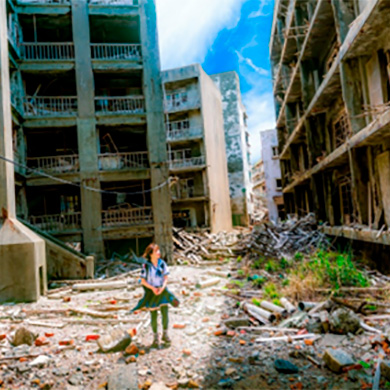
War, Conflict, and the Geopolitics of Technology
This area addresses the intersections between conflict, innovation, and global power relations, including dual-use technologies, climate-driven conflict, post-war reconstruction, militarization of green transitions, and geopolitical competition over strategic technologies.

Climate, Energy, and Infrastructure Transitions
Contributions address low-carbon transitions, renewable and decentralized energy systems, and climate-resilient infrastructures. Emphasis is placed on just transitions, community ownership, and territorial approaches to environmental risk.

Justice, Inequality, and Social Reproduction
Papers examine environmental, gender, racial, and class inequalities, care economies, informal labor, housing precarity, and the social infrastructures that sustain everyday life and collective wellbeing.

Convivial Enterprise, and Commons-based Production
Papers address commons-based production, community finance, localized manufacturing, and entrepreneurship education oriented toward social transformation.
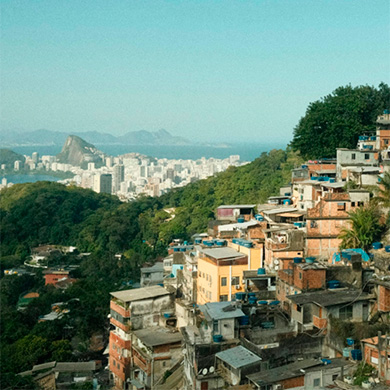
Cities, Territories, and Multi-Scalar Transitions
Papers examine urban, rural, and regional dynamics under ecological and social stress, including land and water governance, regenerative cities, sustainable food systems, and spatial justice across scales.

Diversity, Inclusion, Accessibility, and Representation
This area highlights innovation and design with marginalized communities, accessibility and universal design, inclusive communication technologies, LGBTQIAP+, racial and ethnic diversity, and institutional practices for equity in research and education.
Political Economy of Innovation and Development
Contributions analyze development models, global production systems, industrial policy, technology concentration, dependency structures, and strategies for innovation sovereignty under ecological and geopolitical constraints.

Designing Emerging Technologies: Innovation, Power, and Socioecological Impacts
This area examines how the design of digital and quantum technologies shapes innovation pathways, power relations, and socioecological and ethical outcomes. It welcomes contributions on platform economies, algorithmic governance, surveillance, data colonialism, digital sovereignty, and the challenges of building democratic and accountable technological infrastructures.
Venue
Discover Florianópolis and the Federal University of Santa Catarina. A vibrant island city and campus where IDEAS 2026 will take place.
Author Guidelines
Get Your Paper Ready. Follow the Recommendations Before Submitting It.
Submission Guidelines. We welcome original contributions from researchers presenting their novel and unpublished research, which has not been previously reviewed by another conference or journal and addresses state-of-the-art findings. Your work should cover a wide range of areas related to the IDEAS Conference and its applications, with no limitation to the conference tracks.

Step 1: Preparing your Extended Abstract
Your abstract is a glimpse into your research, and it should entice readers to explore your work...

Step 2: Preparing your Full Paper for Review (after Abstract Acceptance)
To submit your full paper, follow these guidelines.

Step 3 Preparing Camera-Ready Submission
Submit your revised paper in docx format, adhering to the Springer Nature Template within 10 pages.
Paper Submission
We invite you to prepare your abstract and full paper by following the guidelines above and to share your ideas with our interdisciplinary community.
The Microsoft CMT service was used for managing the peer-reviewing process for this conference. This service was provided for free by Microsoft and they bore all expenses, including costs for Azure cloud services as well as for software development and support."
Conference Organization
Check Who Makes IDEAS Possible!
IDEAS is made possible through the coordinated efforts of its organizing institutions and Scientific Committee. The organizing institutions provide strategic and operational support, while the Scientific Committee ensures academic quality, diversity, and rigor. Together, they sustain IDEAS as a credible and vibrant space for knowledge exchange.
IDEAS creates welcoming spaces for dialogue, shared knowledge, and collective action.
 |
 |
 |
 |
 |
CMT ACKNOWLEDGMENT: The Microsoft CMT service was used for managing the peer-reviewing process for this conference. This service was provided for free by Microsoft and they bore all expenses, including costs for Azure cloud services as well as for software development and support.